
ELECTROPLATING SERVICES COMPANY

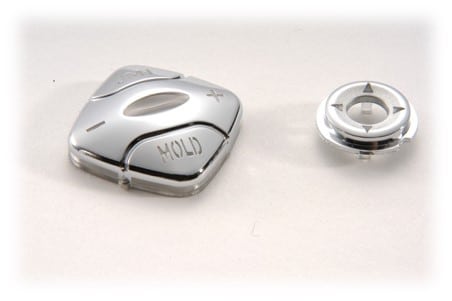
Your product demands the performance and brilliance of bright chrome, and our electroplating service is the low-cost, high-quality solution that delivers. Electroplating is an industrial process where a thin layer of metal is applied onto a product’s surface and bound through the use of an electrical current. This electroplating process maintains your product’s original form but gives it certain properties of high-grade metal, such as heightened durability and aesthetic appeal.
What is Electroplating?




Why Choose CJT?
- Our manufacturing facilities in Thailand, and particularly Bangkok, have quality infrastructure, so the efficiency and reliability of transporting products to port is comparable to other developed countries.
- Thailand has an educated workforce able to handle the demands of a technical manufacturing process like electroplating and injection molding. This workforce also fulfills support functions such as lean manufacturing, as well as scientific injection molding with some of the world’s most advanced equipment.
- Overhead and labor costs are lower in Thailand than even neighboring Asian countries like China, meaning the overall cost of your products is globally competitive.
- There are no special tariffs that single out products coming from Thailand, such as Section 301 tariffs for Chinese goods.
- Thailand is a constitutional monarchy, similar to the UK, meaning nearly non-existent operations disruptions due to political volatility.
- Thailand has managed the pandemic relying on both vaccinations and tracked immunity, as such, the impact on their economy has been minimal.
CJT Electroplating Capabilities
Chrome Electroplating
- Batch process (when cost-effective decorative finish is the primary need)
- Robotic process (when plating performance and decorative finish are both required)
PVD
- For performance (surface hardness, abrasion resistance)
- For cosmetics (infinite number of colors such as stainless steel, brass, black chrome)
Topcoats
- For fingerprint resistance
- For a variety of cosmetic looks
Manual and Robotic Brushing
- Primarily used to achieve the stainless-steel look
Plating over Textures
- A combination of molded-in texture (in the part) and electroplating. This provides a unique look that can only be achieved with this combination of technologies.
- Our plating line capacity is very high. An actual number of parts that can be plated in a year depends on the size of the part. Larger parts measuring 30 inches in diameter may only be able to fit 4 parts per rack whereas smaller parts like knobs can fit 60-100 parts per rack. Based on the speed of the line, just one plating line can finish tens of millions of knob sized parts per year.
Part Size Capabilities
Finishing Capability Options
- Bright
- Matte
- Satin
- Spin Surface
- Brushed Surface
- Selective Plating
How Electroplating May Save Your Business Money
How We Avoid Costly Secondary Operations
- Eliminate unnecessary masking. Masking adds cost in two ways. First, the act of applying a cap or painted-on mask involves material and labor. In addition, painted-on masking ultimately dissolves in the plating process and finds its way to the bottom of the plating tanks, which causes contamination of the plating baths, results in cosmetic defects (which reduces yields) and causes the plating baths to require being changed out more often. All of these issues add to the cost of masking.
- Eliminate the brushing operation in the stainless steel finish. Nearly all Stainless Steel looking finishes involve a brushing operation. This operation is performed after the nickel layer and before the chrome layer. Parts are unracked from the plating line, taken to a brushing operation, and either manually or robotically distressed or “scratched” in order to get that look of brushed stainless steel. Then the parts are re-racked and put back on the plating line for the final chrome layer.
- Replace the brushing operation with a molded-in texture on the plastic part. If it is necessary to have a brushed look to the part, it is possible to mold that texture into the part, then electroplate over the texture to get the brushed stainless steel look. However, it’s not quite as simple as that. The chrome layer over the manual or robotic brushing in original stainless is only .3um thick, whereas the thickness of all the layers over a molded-in brush texture is about 25um thick. The two will not look the same. BUT, it may be acceptable. Its acceptability in any particular application must be determined by sampling and every customer and application is a bit different.
- Eliminate the plating operation. We’re not advocating elimination of the finish we specialize in, but we do believe that in the good/better/best product positioning, chrome plating is most suitable for the better and best products. Perhaps pre-colored plastic resins are most suitable for the good product position.
- Get creative with textures. There are an infinite number of texture types and depths for injection molded parts. Random or rational patterns combined with variations in depth all create interesting finishes when electroplating is applied over them. This is also a way to achieve different looks on the same part without adding any additional cost. For example, a knob with a spin texture on the top, a ring of bright chrome that surrounds the top with a stipple texture on the side, (which simulates matte chrome) is a way of achieving three different finishes on the same part with no additional cost.
Contact Us Today for your Electroplating Needs
CJT Industry, Inc. strives to incorporate client considerations from the first discovery discussion and throughout the entire process. We believe that asking questions and listening intently ensures the success of your product development project. By coordinating across design and engineering teams, we aspire to reduce friction, maintain consistent progress and bring a truly exceptional final result to the table.
For more information about our professional services or to schedule a consultation, contact a CJT Industry, Inc. team member at (847) 306-9877. Our team is always happy to tailor our services and expertise to best meet the unique needs of each individual client.